|
|
 |
|
|
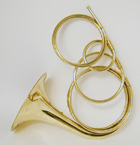
|
Maker:
Location:
Model:
Year:
|
Lowell Greer
Toledo, Ohio
Hofmaster Baroque
2003
|
|
|
|
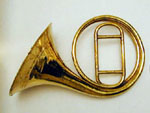
|
Maker:
Location:
Model:
Year:
|
C.T.D.
Paris, France
Petite Cor d'Orchestre
ca. 1807
|
|
|
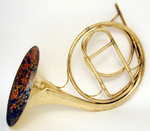
|
Maker:
Location:
Model:
Year:
|
Halary
Paris, France
Cor d'Orchestre
ca. 1830
|
|
|
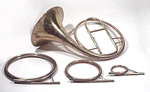
|
Maker:
Location:
Model:
Year:
|
Tabard
Lyon, France
Cor d'Orchestre
ca. 1830
|
|
|
|
Maker:
Location:
Model:
Year:
|
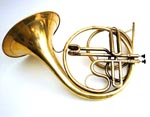
Guichard?
Paris?, France
2 Stoelzel Valves
ca. 1840
|
|
|
|
Maker:
Location:
Model:
Year:
|
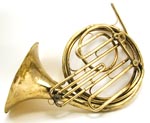
Gautrot
Paris, France
Omnitonic
ca. 1850
|
|
|
|
Maker:
Location:
Model:
Year:
|
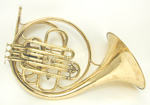
Antoine Courtois
Paris, France
Cor à Pistons (right
hand)
ca. 1870
|
|
|
|
Maker:
Location:
Model:
Year:
|
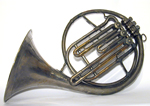
A. Lecomte
Paris, France
single (nickel
plated)
ca. 1880
|
|
|
|
Maker:
Location:
Model:
Year:
|
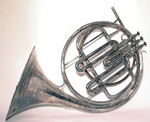
Raoux-Millereau
Paris, France
Ascending, (silver
plated)
ca. 1880
|
|
|
|
Maker:
Location:
Model:
Year:
|
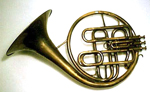
F. Van Caulwelaert
Brussels, Belgium
Gantois (brass)
ca. 1885
|
|
|
|
Maker:
Location:
Model:
Year:
|
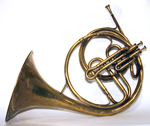
F. Van Cauwelaert
Brussels, Belgium
Gantois (2 valves)
ca. 1890
|
|
|
|
Maker:
Location:
Model:
Year:
|
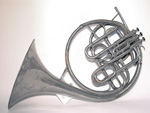
F. Van Cauwelaert
Brussels, Belgium
Gantois (silver
plated)
ca. 1890
|
|
|
|
Maker:
Location:
Model:
Year:
|
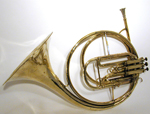
C. Mahilllon
Brussels, Belgium
499
ca. 1890
|
|
|
|
Maker:
Location:
Model:
Year:
|
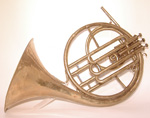
Steemans
Brussels, Belgium
single
ca.
|
|
|
|
Maker:
Location:
Model:
Year:
|
Gautrot-Brevete
Paris, France
Cor d'Harmonie
ca. 1890
|
|
|
|
Maker:
Location:
Model:
Year:
|
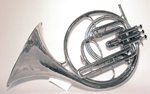
Thibouville-Lamy
Paris, France
Cor d'Harmonie
ca. 1890
|
|
|
|
Maker:
Location:
Model:
Year:
|
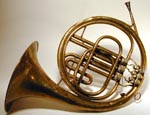
C. Mahillon
Brussels, Belgium
29
ca. 1897
|
|
|
|
|
Maker:
Location:
Model:
Year:
|
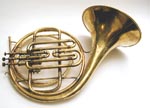
Raoux-Millereau
Paris, France
Brémond
ca. 1900
|
|
|
|
Maker:
Location:
Model:
Year:
|
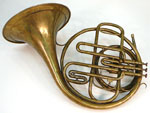
Boosey & Co.
London, England
Class A, Light Valve
1900
|
|
|
|
Maker:
Location:
Model:
Year:
|
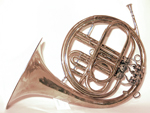
C. Mahillon
Brussels, Belgium
single (rotary
valves)
ca. 1900
|
|
|
|
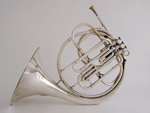
Maker:
Location:
Model:
Year:
|
C. Mahillon
Brussels, Belgium
412 (silver plated)
ca. 1900
|
001
|
|
|
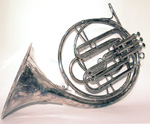
Maker:
Location:
Model:
Year:
|
C. Mahillon
Brussels, Belgium
499 (silver plated)
ca. 1905
|
|
|
|
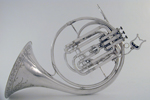
Maker:
Location:
Model:
Year:
|
F. Besson
Paris, France
Cor d'Harmonie
ca. 1905-1910
|
090
|
|
|
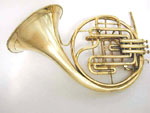
Maker:
Location:
Model:
Year:
|
Besson
London, England
Prototype
ca. 1920
|
|
|
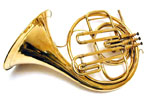
|
Maker:
Location:
Model:
Year:
|
Boosey & Co.
London, England
Sotone
1921
|
|
|
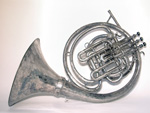
|
Maker:
Location:
Model:
Year:
|
Henri Selmer
Paris, France
compensating, ascending
1933
|
|
|
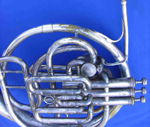
|
Maker:
Location:
Model:
Year:
|
Couesnon
Paris, France
double,
ascending
ca. 1934?
|
|
|
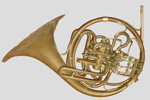
|
Maker:
Location:
Model:
Year:
|
Gebroeders De Prins
Anvers, Belgium
compensating, double
ca. 1935 - 1945
|
092
|
|
|
Maker:
Location:
Model:
Year:
|
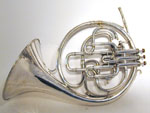
Couesnon
Paris, France
compensating, ascending
ca. 1945
|
|
|
|
Maker:
Location:
Model:
Year:
|
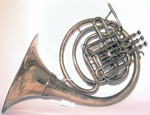
Henri Selmer
Paris, France
compensating, ascending
ca. 1950
|
|
|
|
|
|
The horns of France, England, Belgium are grouped
together here due to their close similarities. They are
of relatively small bore, small bell, and similar taper
based on the profile of the original French natural
horns of Raoux, et. al. Credit for the invention of the
first practical valved horn has generally been given to
Heinrich Stölzel (or Stoelzel) of Breslau, Upper Silesia
in 1814. (This invention was challenged by Friedrich
Blühmel who claimed to have invented a valve as early as
1811/12. Stözel and Blühmel were issued a joint patent
in 1818.)
For most of the nineteenth century there was strong
opposition in France to the use of valves at all. The
Stözel valve enjoyed some popularity there on horns and
cornets prior to about 1850, however the valveless cor
d'orchestre continued to be preferred. The
continuing strong predilection for the natural horn
sound with its stopped and half stopped coloration led
to the development first of the "omnitonic" horns and
later of the sauterelle removeable valve
section. The omnitonic concept was to semi-automate the
process changing the length of the air column using
various ingenius combinations of slides or rotary "taps"
to eliminate the box of terminal crooks that accompanied
the cor d'orchestre. One such horn by P.-L.
Gautrot is included in this collection.
After about 1850 horns made in France,
England, and Belgium almost universally employed the
piston valve designed by François Périnet in 1839. The
other uniquely French innovation was the ascending third
valve system developed around 1847 by Jules Halary. In
this system the whole-tone third valve slide is part of
he open horn airway and is subtracted when the valve is
pressed. For this reason the horn is played with a G
terminal crook which stands the horn in F with the added
length of the third valve. Most of the F-horn fingerings
are unchanged with the exception of the total loss of
some notes in the lower register. The advantage is the
some of unstable notes of the F horn are eliminated due
to the shift in the harmonic series afforded by the
ascending valve. This system was common (although not
universal) into the double horn era of the twentieth
century. Some horns were equipped with a sauterelle
in which the standard valve section can be slipped out
of the horn corpus and replaced by a section of straight
tubing thus converting the horn back to its "natural"
mode. This is the form that was advocated by François
Brémond at the turn of the twentieth century and
probably the horn for which Dukas intended his Villanelle
as the morceau du concours for the Paris
Conservatory in 1906. In the twentieth century, double
horns became prominent, still using the Périnet piston
for the three finger valves (often with the ascending
third valve) but usually incorporating a rotary thumb
valve for the F/Bb conversion.
|